
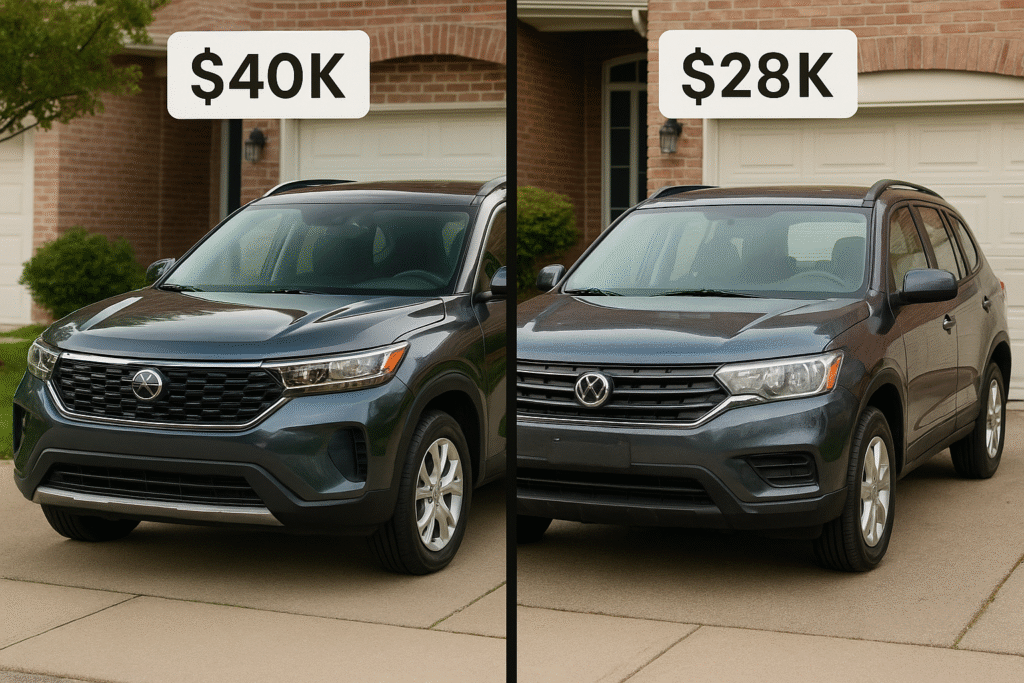
Meet Sarah.
She bought a brand-new SUV last summer—shiny paint, that “new car” smell, and a monthly payment to match.
Her neighbor, Jack, bought the exact same model.
Same color. Same features.
Only his was two years older—and $12,000 cheaper.
And he still had factory warranty coverage.
Now here’s the kicker: They both drive the same car.
But one of them will be out of debt much sooner—and putting that extra money toward travel, savings, or even their next car.
Can you guess who?
The Hidden Cost of Buying New
Buying new isn’t just about price. It’s about depreciation.
According to Edmunds, a new car can lose 20% to 30% of its value the moment you drive it off the lot. After five years? It’s often down 50% or more.
That means if you spend $40,000 on a new SUV today, it might only be worth $20,000 in a few years.
Would you pay $20K just to say “I bought it new”?
Why Buying Used Might Be Smarter
Here’s why savvy buyers like Jack win:
- Lower purchase price: Jack paid $28,000 for a car Sarah spent $40,000 on.
- Less depreciation: The biggest drop already happened.
- Still under warranty: Many certified pre-owned (CPO) vehicles come with extended warranties.
- Lower insurance: Older vehicles often cost less to insure.
But What About Maintenance?
Yes, used cars may need more upkeep. But think about this:
Even if Jack spends $2,000 more in maintenance over three years, he’s still ahead by $10,000.
And with a proper inspection before purchase, most modern used cars are just as reliable as new ones.
The Bottom Line
If you love the idea of saving money while still driving something that looks, feels, and runs like new—
Buy used.
Buy smart.
And let someone else pay for the depreciation.
Ready to compare your next quote?
Contact Integrity Carbuyer to make sure you’re not overpaying.
