
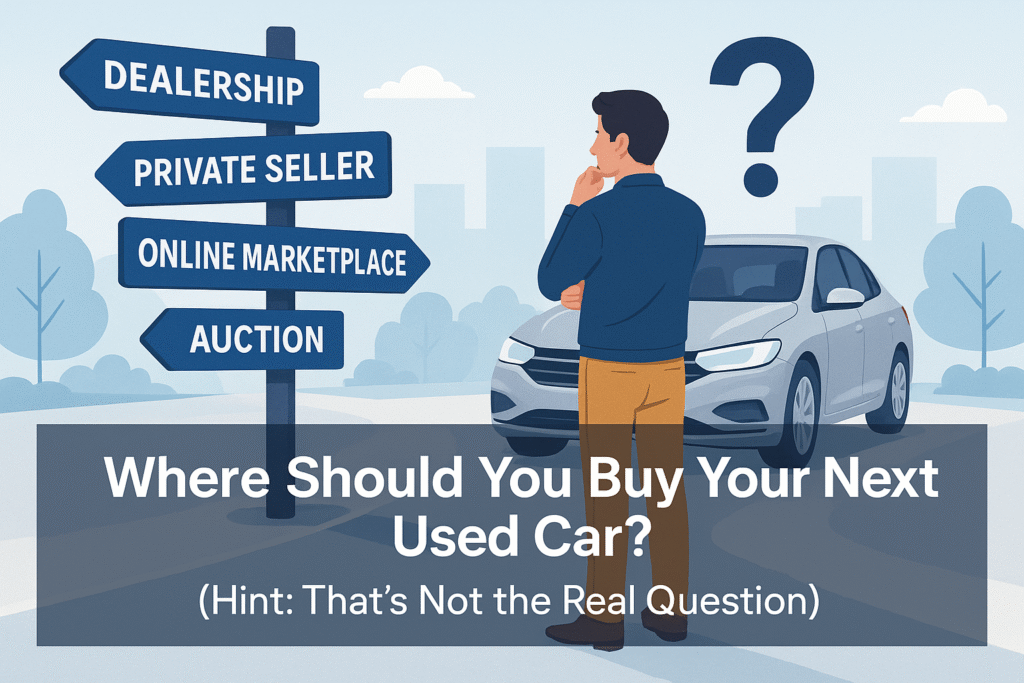
You’re ready to buy a used car—but where do you go? A dealership? Craigslist? That online app your cousin swears by? It feels like picking the place is half the battle. But here’s the truth: the place isn’t nearly as important as the process. Most people lose thousands not because they picked the wrong source—but because they didn’t know how to buy right.
Let’s break down the most popular places to buy a used car—and then shift the focus to what really saves you money: a disciplined buying strategy.
🚗 Top Places to Buy a Used Car
1. Franchise Dealerships (Toyota, Honda, Ford, etc.)
Pros:
- Certified pre-owned (CPO) options with warranties
- Access to service history and vehicle inspections
- Financing and trade-in options
- Legal accountability
Cons:
- Higher prices (CPO or not)
- Add-on products and upselling pressure
- May not negotiate aggressively
Best for: Buyers who want peace of mind and minimal risk
2. Independent Used Car Dealers
Pros:
- More room to negotiate
- Often lower sticker prices
- Inventory variety
Cons:
- Varies wildly in quality and transparency
- Limited or no warranties
- Some dealers don’t inspect vehicles thoroughly
Best for: Budget-conscious shoppers who are willing to inspect carefully
3. Online Marketplaces (Carvana, Vroom, Shift, etc.)
Pros:
- Shop and buy 100% online
- 7-day return windows
- Delivery to your door
Cons:
- Prices are typically non-negotiable
- Limited ability to test drive beforehand
- Some customers report delays and title issues
Best for: Tech-savvy buyers who prioritize convenience
4. Private Party Sellers (Facebook Marketplace, Craigslist, OfferUp, etc.)
Pros:
- Lowest prices on average
- Direct negotiation with seller
- No dealership fees
Cons:
- Higher risk (no warranty, limited recourse)
- Requires mechanical knowledge or a pre-purchase inspection
- Can be time-consuming or sketchy
Best for: Experienced buyers who know how to vet a car and want a deal
5. Used Car Auctions (Public and Dealer Auctions)
Pros:
- Deep discounts—especially at public auctions
- Wide variety of vehicles
Cons:
- No test drives
- Sales are final—buyer beware
- Risk of buying a lemon
Best for: Advanced buyers, mechanics, or flippers
🧠 But Wait—That’s NOT the Real Question
Sure, where you buy matters. But how you buy makes the biggest difference.
Even if you walk into the best dealership in the country, you could still overpay, buy the wrong car, or miss hidden issues—if you don’t follow a proven process.

✅ The 5-Step Disciplined Process to Buy Smarter
- Know What You Need (Not What You Want)
Make a checklist of your must-haves (e.g. fuel efficiency, AWD, low miles) based on lifestyle, not just dreams. - Set Your Budget—And Stick to It
Include taxes, registration, and at least $500–$1,000 for unexpected repairs. - Check Vehicle History + Condition
Always get a Carfax/AutoCheck and do a pre-purchase inspection (even from a dealer!). - Compare Listings Across Sources
Look at multiple platforms to spot pricing patterns and red flags. - Negotiate Smart or Walk Away
Whether at a dealership or with a private seller, be willing to walk. That’s your strongest leverage.
🏁 Final Thoughts: Where Meets How
So… where should you buy your next used car?
It depends. If you value safety and peace of mind, go franchise. If you’re hunting for the best deal and know how to vet a car, go private party. But in the end, discipline beats location.
If you follow a repeatable process, you’ll save thousands—no matter where you buy.
Need help analyzing a used car deal?
Integrity Carbuyer offers expert guidance to help you review quotes, compare listings, and avoid getting ripped off. We’re not here to sell you a car—we’re here to help you buy smarter.
👉 Contact us today for a free consultation.
